Acne is by far the most common, but dermatitis and eczema follow closely.
As a result of their often severe symptoms, topic and contact dermatitis are considered types of eczema.
These can get worse from time to time an occurrence known as a flare-up.

Atopic eczema can sometimes go away on its own in adolescence, but that isn’t always the case.
A less intense form of eczema in the dermatitis realm is contact dermatitis.
This condition occurs as an allergic reaction to an irritant or an allergen, as perHealthline.

Both can appear anywhere on the body.
Common irritants are certain cosmetic ingredients, hygiene products, and even some metals.
The condition can be treated by avoiding these or using prescription medication like corticosteroids to relieve uncomfortable symptoms.
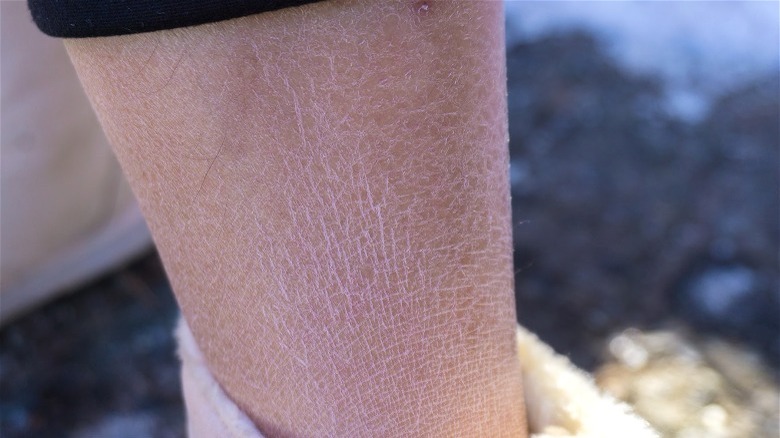
Asteatotic eczema
Eczema characterized by abnormally dry and cracked skin is called asteatotic eczema.
It’s mostly found in the older population, but can affect any age group.
According toDermNet, the condition manifests through excessively dry skin that appears cracked.
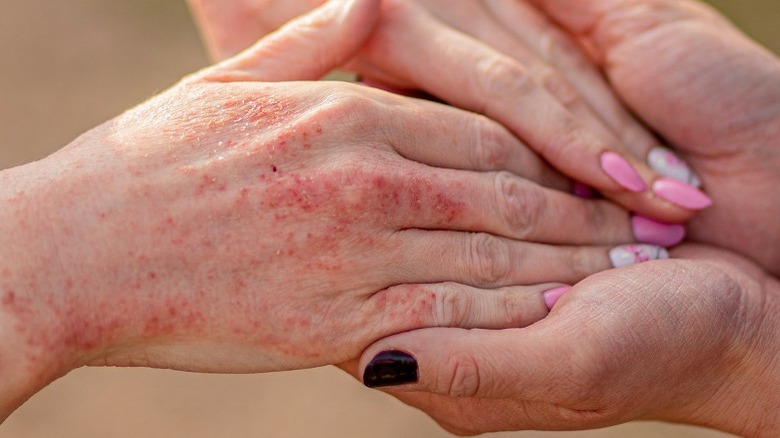
It specifically tends to show up on the shins, but isn’t restricted to the area.
Asteatotic eczema mainly occurs due to passive water loss.
This happens as a consequence of external factors, such as low humidity and excessive bathing.
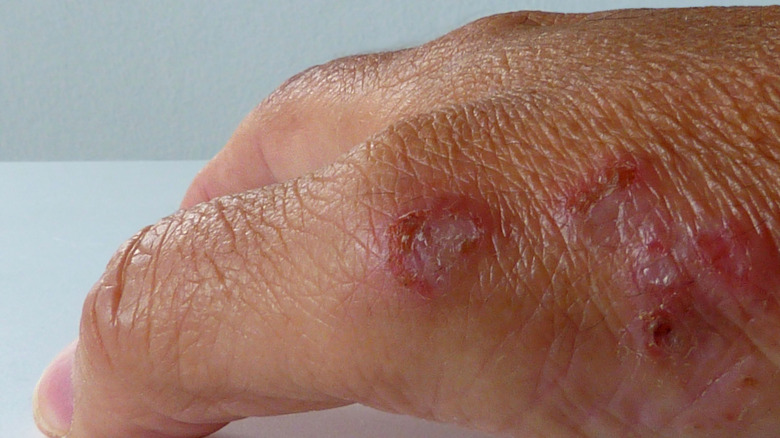
Asteatotic eczema can also be brought on by the use of retinoids, an underactive thyroid, or malnutrition.
Treatments mostly consist of taking care of the skin and making sure it doesn’t get so dry.
This usually results in symptoms of the condition withdrawing quickly.
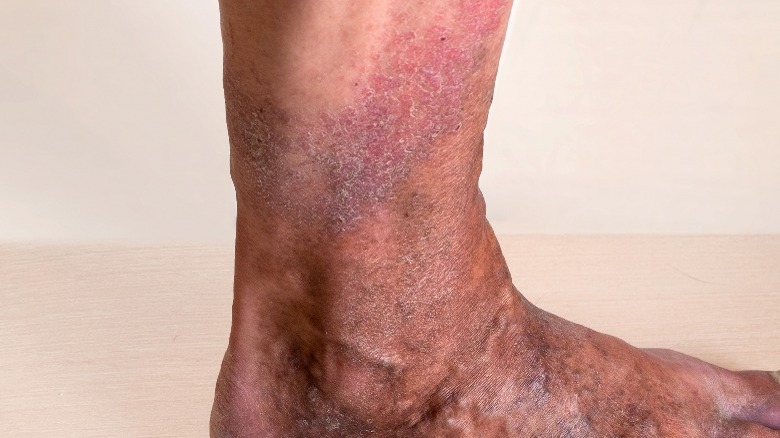
When you do bathe, avoid water that’s too hot.
Dyshidrotic eczema
Eczema that only affects the hands and feet is known as dyshidrotic eczema.
According to theNational Eczema Association, dyshidrotic eczema is characterized by tiny blisters that resemble bubbles on the skin.
Younger adults are the ones most likely to be affected by the condition.
Humid environments and stress are oftentimes the triggers for a dyshidrotic flare-up.
However, a fungal infection can be to blame as well.
Corticosteroids and anti-fungal ointments are commonly prescribed treatments for dyshidrotic eczema.
Professionals also emphasize maintaining personal hygiene and avoiding known triggers if possible.
While it is possible to only get a single patch, it’s more common to have multiple ones.
Nummular eczema can manifest anywhere on the body, but usually does not affect the head.
Relieving symptoms is about as far as treating the condition goes.
Depending on the severity of your ailments, the doctor may prescribe you corticosteroids and antihistamines.
Even though they won’t directly affect discoid eczema, consider takingvitamins that can improve dry skin.
If not treated, the condition may worsen and linger for years.
It mostly affects older individuals.
The skin condition itself is usually treated with corticosteroids and specialized ointments, as with other types of eczema.
When left untreated, symptoms of both will worsen over time and may even cause a deep infection.
While varicose veins and eczema themselves won’t kill you, they can lead to complications that can.
If you suspect you have this condition, reach out to your doctor right away.
