By almost all accounts,full-blown anxietycan extraordinarily difficult to manage.
Various levels of stress in anyone’s life are inevitable, of course.
But what exactlyissevere anxiety, and where does it come from?

But both are equally insidious.
Here’s whatreallyhappens to your body when you have an anxiety attack.
And those reasons aren’t just all in their heads, either.

Again, nearly all textbook signs of a cardiac event.
If you have any of the above symptoms, just go to the ER.
Better safe than sorry is always a sound, and sane, philosophy.

A similar condition, known as depersonalization, can also be present.
In other words, you may feel like you don’t even have access to yourself.
But it isn’t, really.Sheldon D. Sheps, M.D.

wrote for the Mayo Clinic thatanxiety, by itself, is not a cause of long-term hypertension.
As stated, this doesn’t qualify as an immediate life-threatening emergency equivalent to chronic high-blood pressure.
But ifanxiety is disrupting your lifeon an incessant basis, it’s not nothing.

They recount intense “drowning” feelings, coupled with vertigo and an intense fear of dying.
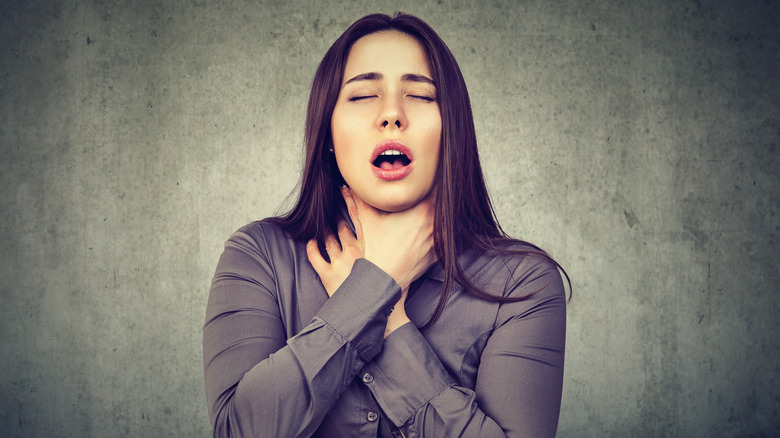
Those suffering an attack will often gasp for breath, or feel like they’re at risk of smothering.
At its worst, this can escalate into outright hyperventilation.

In other words, practicing deep breathing techniques is guaranteed to do more good than harm.
Establishing a firm itinerary can also be profoundly useful.
Nothing is forever even anxiety attacks.
Hang in there, you’re not alone.
In fact, many people even get somewhat used to co-existing with their condition.
That’s why many of the physical changes that sometimes preempt attacks often go unnoticed.

All of which occurred roughly 45 minutes before sufferers actually had full blown attacks.
Albeit one that’s not as easy to detect.
300,000 people are diagnosed with hyperthyroidism annually, and women are more likely to develop the condition than men.

Diabetes can also cause extreme anxiousness, and seeking treatment for it can therefore alleviate many anxiety-related symptoms.