Warming up may also help reduce muscle soreness and lessen your risk of injury."
For working out in the cold, this step is even more essential.
Dr. Smith explains, “Cold temperatures typically slow down metabolic activity and muscle/nervous activity of the body.
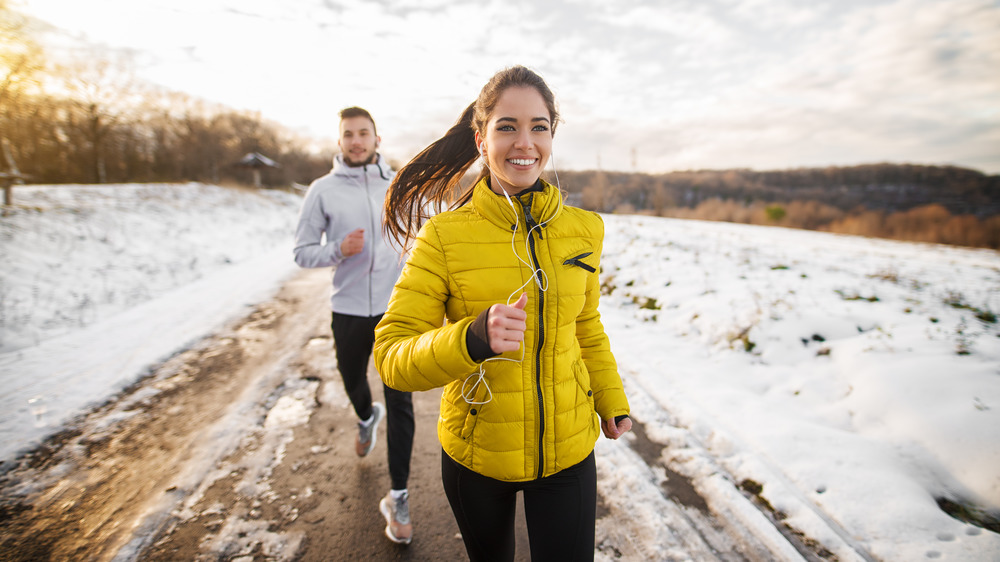
Therefore, a longer warm-up period and more gradual increase in demands are required.”
That means what you would normally consider a sufficient warm-up won’t be enough.
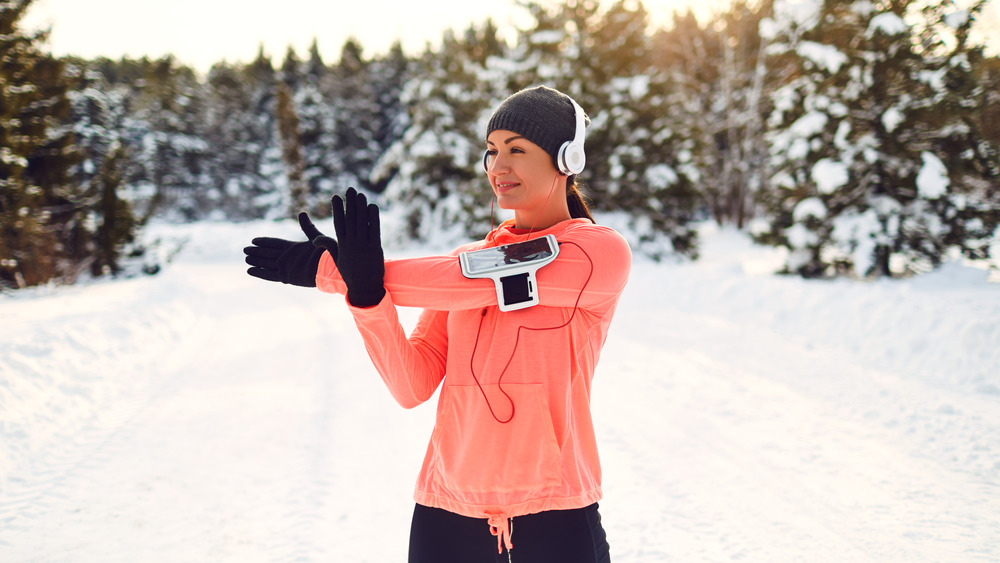
Extend your warm-up to be sure your blood is pumping and your body temperature is rising.
But that should never be a deterrent to meeting your fitness objectives.
Avoid cotton, which stays wet next to your skin.
Next, add a layer of fleece or wool for insulation.
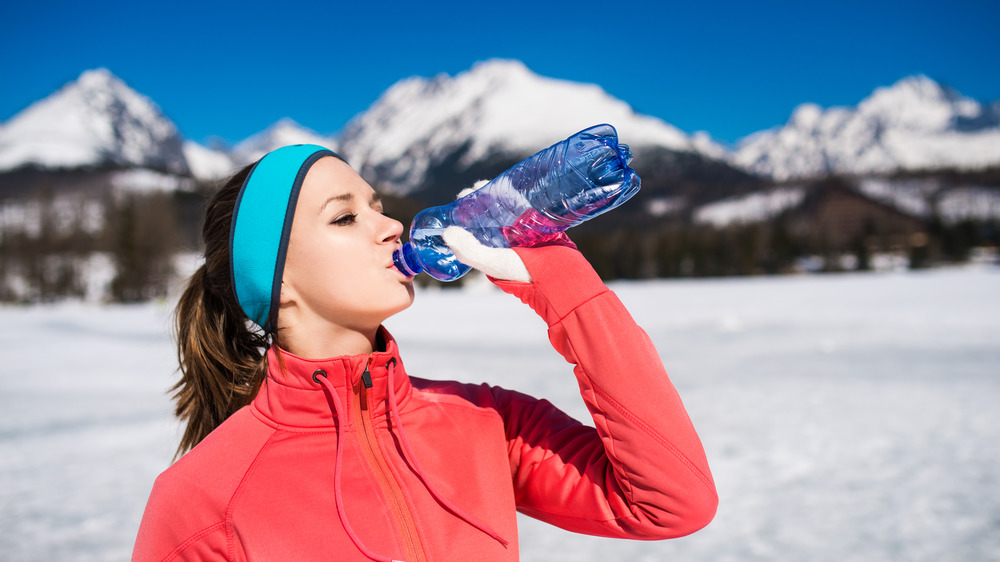
Top this with a waterproof, breathable outer layer."
And most importantly,don’t forget your water.
He explains, “The ‘fog’ you see on exhalation is water loss and must be replaced.
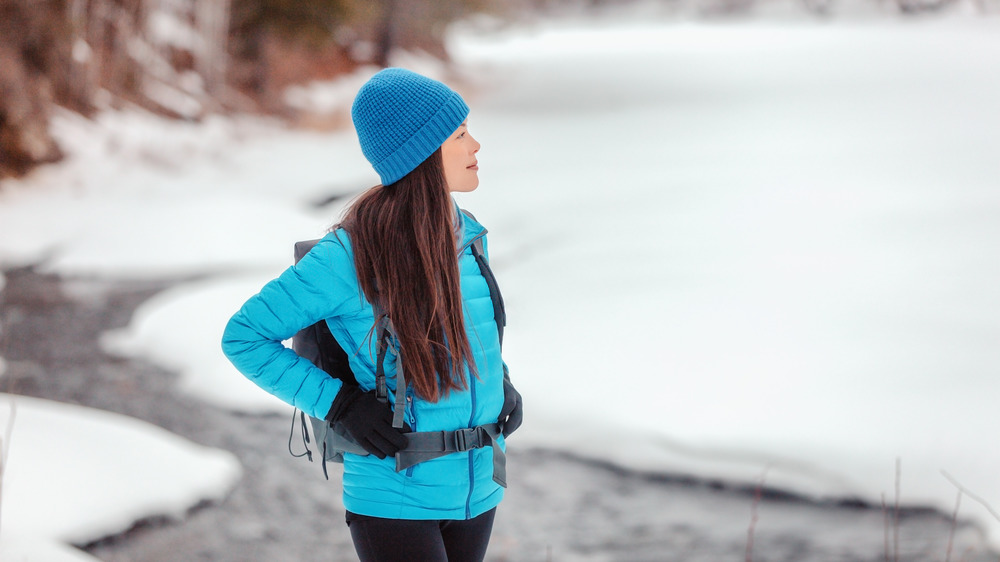
Fluid intake should, as with all exercise, match loss through sweat and respiration.”
He adds, “Different activities have optimum temperatures.
The most important takeaway, however, is that you are prioritizing your health.
Wearing a hat or beanie is a great way to preserve heat.”
You know yourself best, after all.
He also advises “planning access to blankets/warm beverages and shelter,” as an extra measure of preparation.
