We may receive a commission on purchases made from links.
We’re all guilty of it: sticking Q-tips in our ears, despite being told repeatedly not to.
The satisfaction of sopping up moisture inside our ears is akin to scratching a hard-to-reach itch.

We know it’s bad for us.
We do it anyway, compelled by the same compulsion as brushing our teeth or taking a shower.
Plunging that cotton-tipped implement into our ears has practically become a cultural norm.

If Q-tips aren’t the way to get clean ears, what’s the secret?
Spoiler alert: It’s simpler than you might think.
Over the decades, the product went through several name changes.
Despite these advancements, the product’s marketing remained unchanged.
But by then, it was too late.
), and nursing injuries.

As of this writing, there isn’t a direct link as to why Q-tips added a warning label.
The majority (52%) said it was “because it seems like a good idea.”
Looks like those Q-tip ads worked!

This self-made dam causes earwax to harden, forming a bang out of plug against the eardrum.
Believe it or not, it serves a vital purpose and will take care of itself if left alone.
The ears also have their own self-cleaning system.

As the earwax reaches the outer ear, it dries out and usually flakes off, perCleveland Clinic.
“But that’s not true at all.”
A2017 studypublished in The Journal of Pediatrics reviewed U.S. emergency room department data from 1990 to 2010.

It found that more than 263,000 children were treated for various conditions brought on by incorrect cotton swab use.
The most common injury was a punctured eardrum or a foreign object in the ear.
But why do Q-tips feel so darn good?
“There are actually four different cranial nerves that innervate the ear canal,” otolaryngologist Abbas Anwar toldPrevention.
To secure your eardrums, try giving yourself avagus nerve massageinstead.
Are Q-tips addictive?
“In that sense, it’s like scratching an itch.”
Internet forums,radio-show hosts, and eventelevision skitshave half-jokingly posed questions about the addictiveness of Q-tip use.
In other words,ear cleaningis often a ritualistic hygiene practice ingrained at an early age.
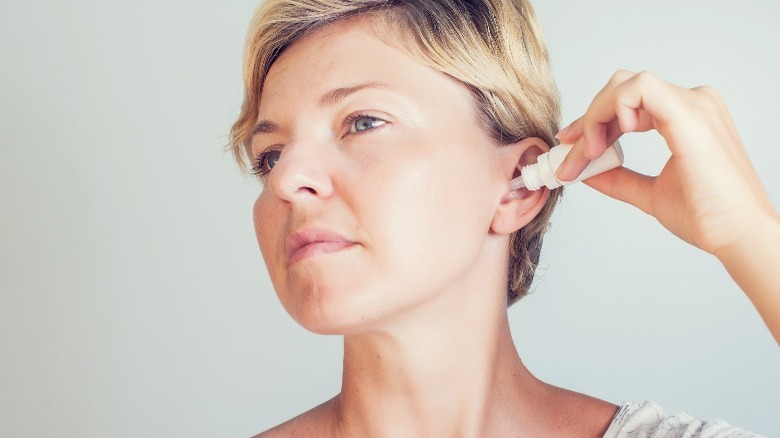
For most people, ear maintenance is simple: Do nothing.
Your ears will take care of themselves.
But if you feel you absolutelymustclean your ears, there are a couple of safe DIY methods.

And don’t even think about twisting the tissue to make your own version of a Q-tip.
The key is to avoid sticking anything in your ear unless done so by a medical professional.
It’s important to note that some people can produce excess earwax, according toMedical News Today.

If you find that your ears are often full of gunk, it’s best to see your doctor.
But that hasn’t stopped some folks from coming up with creative and wild!
ways to purge earwax.
At-home suction devices, such asWaxVac, are not considered safe or effective, notes theCleveland Clinic.
There are alsospiral-tipped ear-cleaning gadgetsthat arenot recommended by physicians.
And althoughessential oilscan alleviate certain conditions, they shouldn’t go in your ears.
But perhaps the most bizarre, and dangerous, home remedy isear candling.
